Faith & Hardship · Marriage / Family · Practical Christian Living · Victory & Deliverance
Why Your Womb Won’t Yield – Part 2: The Heart, the Mouth, and the Woman Within
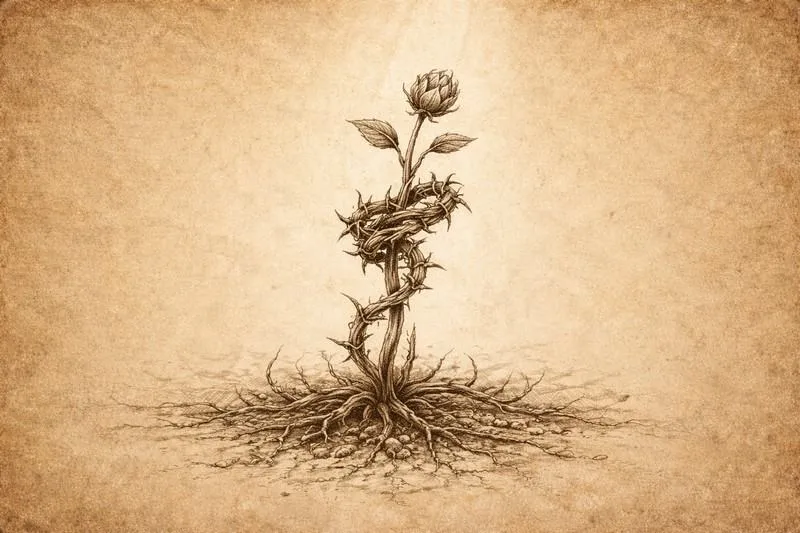
When infertility lingers, the battle is not always in the body. Sometimes the deepest barriers are hidden in the heart.
“Keep and guard your heart with all vigilance and above all that you guard, for out of it flow the springs of life.”
— Proverbs 4:23 (AMPC)
Some questions carry a deeper ache than others.
The longing to hold a child… the quiet disappointment when month after month passes… the confusion of wondering why something so natural feels so far away.
For many women, infertility or repeated loss becomes more than a medical issue. It becomes a deeply personal and spiritual battle filled with unanswered questions, hidden shame, and silent grief—sometimes even becoming part of their identity.
But God does not leave us in darkness when something precious is delayed.
In Part 1 of this series, we explored how spiritual warfare can affect fruitfulness. But sometimes the battlefield is closer than we realise. The obstacles are not always external — sometimes they are hidden within the heart.
In this second part, we’ll look deeper at four inner areas that can quietly influence fruitfulness:
1️⃣ When you struggle to accept yourself
2️⃣ Sexual trauma and emotional disconnect
3️⃣ Word curses and negative declarations
4️⃣ Fear and anxiety that choke fruitfulness
These issues are rarely discussed, yet they touch the deepest places of a woman’s identity. They involve wounds of the heart, beliefs about ourselves, and words that shape the atmosphere of our lives.
The good news is this: God cares about every part of you — spirit, soul, and body.
And when the hidden places of the heart are healed, the foundation for life can begin to change.
As you read, may the Holy Spirit gently reveal anything that needs healing, break every agreement with lies, and restore confidence in the beautiful design God placed within you.
1. When You Struggle to Accept Yourself
Many women carry hidden shame, trauma, or identity wounds that cause them to disconnect from their own femininity — essentially rejecting the way God designed them. This disconnect, in turn, can cause them to see their womanhood as a burden rather than a gift. This may not be deliberate, but the spiritual implications can be real.
When the soul becomes entangled in lies about identity or worth, it can quietly resist the very fruitfulness it longs for. Paul describes this condition as being “alienated from the life of God” through darkened understanding and hardness of heart (Ephesians 4:18). When the heart is conflicted about its own design, the body often reflects that struggle.
Let’s look at two ways this rejection can take root.
🤍 Self-Rejection: When You Turn Against Yourself
When I was 33, God showed me the root of my self-rejection through a dream.
In the dream I experienced what felt like a miscarriage, but instead of a baby it was a blood-covered doll. As I prayed about it, God brought back a childhood memory of playing with a Barbie doll and thinking, “If only I looked like this, people would like me.”
In that moment, I didn’t just admire beauty—I made a quiet inner vow:
“I’m not enough as I am.”
Over time that belief grew into deep self-rejection. Without realising it, I had become spiritually “pregnant” with a toxic seed of self-hatred.
When God revealed this to me, I repented and renounced the lies I had believed about my body and identity. I asked Him to cleanse my heart and renew my mind.
That moment marked the beginning of healing.
Because when we reject our body, our identity, or our worth, we can unknowingly teach our own hearts—and even our wombs—to resist life.
But God tells a very different story about our design.
“For You formed my inward parts;
You knitted me together in my mother’s womb.
I praise You, for I am fearfully and wonderfully made.”
— Psalm 139:13–14
Your body was never an accident.
Your design was written with intention.
🌸 When You Resent Being a Woman
Sometimes rejection of our design begins much earlier.
Maybe the example you saw of womanhood came wrapped in shame. Perhaps the women around you were uncomfortable in their own bodies, constantly trying to measure up to impossible standards.
Others carry a different wound—the pain of being objectified. To be looked at but never truly seen. Valued for appearance rather than personhood.
Over time these experiences can plant a subtle belief:
being a woman is a burden rather than a gift.
You may begin to resent your body—your cycles, your emotions, or the vulnerability that comes with femininity. What God designed as beautiful can start to feel inconvenient or even shameful.
But when a woman begins to resent her femininity, she may unknowingly begin to resist the very vessel God designed to carry life.
The enemy’s strategy is not just insecurity—it is to make you despise the very design God created to nurture, conceive, and bring forth life.
Because how can a womb yield life when the woman carrying it has learned to despise the vessel?
✨ Covenant Identity & the Blessing of the Womb
Throughout Scripture, fruitfulness is tied to covenant blessing.
“He will love you, bless you, and multiply you…
There shall not be male or female barren among you.”
— Deuteronomy 7:13–14
God’s heart toward His people has always been multiplication and life.
But when we, consciously or subconsciously, reject our bodies or our womanhood, we may unknowingly stand in tension with what God calls blessed. Self-rejection whispers:
“I don’t like what You made.”
“I wish I were different.”
“I’m not enough.”
Yet God declares the opposite.
You are loved.
You are blessed.
And you were created with purpose.
Let His words override the inner critic. Let His truth redefine and shape your identity. And let your heart begin to bless what God has already called beautiful—including your womanhood.
When the heart comes back into agreement with God’s design, the foundation for fruitfulness begins to shift.
And sometimes, healing begins in the place we least expect: how we see ourselves.
2. Sexual Trauma and Emotional Disconnect
Another hidden barrier to fruitfulness can be trauma—especially sexual trauma. These experiences do not remain in the past. They leave imprints on the nervous system, the emotions, and sometimes even the body itself. What wounds the soul can disrupt the body’s sense of safety, and a body that does not feel safe often struggles to open to the processes designed to bring forth life.
For some women, these buried wounds only surface when the body attempts the holy work of conception, pregnancy, or birth.
A midwife once shared an observation with me from years of assisting births. Sometimes labour would stall for hours even though everything looked medically normal. Contractions would continue but make no progress.
Over time she began asking a simple question:
“Is there someone you feel hurt or unsettled by?”
Often the answer revealed unresolved pain—sometimes sexual abuse, sometimes deep betrayal or conflict with someone close. And in many cases, when the mother chose to forgive—even through tears and trembling—the labour began to progress again.
What had been frozen in pain began to move again in peace.
Science echoes what Scripture already suggests: wounds of the heart can echo in the body. Studies link sexual abuse and early trauma to higher rates of infertility, irregular cycles, delayed conception, and even increased risk of miscarriage. Early emotional wounds can disrupt the delicate systems that regulate hormones, stress responses, and reproductive health.
Sexual trauma is more than a physical violation—it is an assault on trust and identity. When betrayal comes from someone who should have protected or loved us, it can fracture the soul. Psychologists call one common response dissociation—the mind’s way of protecting itself by disconnecting from overwhelming pain.
But what the mind separates for survival, the heart often never fully processes.
This disconnect can create emotional and physical walls. Intimacy becomes complicated. The body remembers what the soul tried to bury, and what was meant to be a place of safety can begin to feel like a place of threat.
Over time, this protective response can quietly send a message to the body:
“It isn’t safe to open.”
When pain teaches the soul to hide, the body often follows.
Scripture shows us how deeply such wounds can affect a person’s life. In 2 Samuel 13, Tamar—King David’s daughter—was violated by someone she trusted. Afterward, the Bible says she lived “a desolate woman” in her brother Absalom’s house.
That single word—desolate—captures the devastation trauma can leave behind. Tamar was not only robbed of safety; she was left emotionally isolated, her life marked by grief and silence.
But Tamar’s story is not God’s final word for anyone.
God sees what was done.
He grieves what broke you.
God is the God who suffers with you.
And He does not leave the wounded where they fell.
Healing often begins with release:
releasing the offender into God’s hands,
releasing the lies trauma planted,
and releasing the shame that was never yours to carry.
Because your body listens to your heart.
When the soul begins to find peace, the body often follows.
Scripture reminds us:
“He heals the brokenhearted and binds up their wounds.”
— Psalm 147:3
God’s healing does not stop at the surface. He restores the places where pain once ruled and gently rebuilds trust where it was shattered.
Sometimes the very places that feel most broken are the places God longs to restore most deeply.
And when the heart begins to heal, the body can begin to open again to life.
3. Word Curses and Negative Declarations
“Death and life are in the power of the tongue.” — Proverbs 18:21
Words are never neutral. They carry weight—creative power that shapes the atmosphere around us. Scripture even warns:
“You are snared by the words of your mouth.” — Proverbs 6:2
The words we speak can either align with God’s truth or bind us to fear, shame, and hopelessness.
From the beginning, God created by speaking. And because we are made in His image, our words also carry creative power. They can build life—or reinforce brokenness.
But when pain settles in the heart, it often spills into speech or becomes silent inner vows—agreements we make in moments of despair:
“I’ll never try again.”
“My body is broken.”
“I don’t deserve to be a mother.”
Sometimes these words are spoken aloud. Other times they live quietly in the mind as what Scripture calls “the meditations of the heart” (Psalm 19:14).
And what the heart believes, the mouth eventually declares.
James describes the power of the tongue in sobering terms:
“The tongue is a fire… setting on fire the entire course of life.” — James 3:6
Words do not simply disappear. They influence the direction of our lives, our relationships, and even the way we see our bodies.
🗣️ How Words Become (Demonic) Agreements
In seasons of infertility, miscarriage, or prolonged disappointment, many people unknowingly begin agreeing with lies such as:
“I’m a failure.”
“Something is wrong with me.”
“Maybe God is punishing me.”
“Maybe it just wasn’t meant to be.”
Others take these thoughts even deeper:
“I’ll never be enough.”
“My body betrayed me.”
“It’s safer not to hope.”
These statements may seem like expressions of pain, but over time they can become inner vows—beliefs that shape how we view ourselves and our future.
While these vows feel protective, they often become prisons. They guard the heart from further disappointment—but they also shut the door to hope.
💔 The Fallout of Harsh Words in Marriage
Words spoken within marriage can be even more damaging, because they come from the person who should be the safest place in the world.
Statements such as:
“I wish I’d never married you.”
“This is all your fault.”
“Why can’t you just get pregnant like other women?”
do more than wound emotions—they fracture trust and choke intimacy.
For a woman especially, words that shame her body or blame her for infertility strike the deepest parts of her identity. Over time they can plant painful beliefs:
“My body is the problem.”
“I’ll never be enough.”
When intimacy becomes surrounded by blame, rejection, or contempt, the soul often builds protective walls. And those walls can translate into the body withdrawing from the very processes meant to bring forth life.
⚠️ Other Voices That Can Shape Our Thinking
Sometimes the most damaging words are not spoken in anger but in authority.
Doctors, family members, or spiritual leaders may say things like:
“You’ll probably never conceive naturally.”
“You’re too old to try now.”
“Maybe God doesn’t want you to have children.”
Even when spoken without ill intent, these statements can settle into the heart and form limiting beliefs.
Over time they become internalised:
“I’ll never hope again.”
“I’ll just lose another baby.”
“My body failed.”
After miscarriage, these thoughts can become especially sharp:
“My body failed my baby.”
“I caused this.”
“My womb is a graveyard.”
Beloved, these words are not harmless. They are agreements—and agreements shape expectations.
⛓️💥 Breaking the Agreement
The good news is that what was spoken can also be renounced.
Healing often begins by allowing God to expose the words and vows we have believed. As the Holy Spirit brings them to light, we can reject them and replace them with truth.
Scripture invites us to pray:
“Search me, O God, and know my heart… lead me in the way everlasting.” — Psalm 139:23–24
Then we declare what God says instead:
“I am fearfully and wonderfully made.” — Psalm 139:14
“I shall not die, but live.” — Psalm 118:17
“None shall miscarry or be barren in your land.” — Exodus 23:26
When we align our words with God’s truth, we begin dismantling the lies that shaped our thinking.
Because words create worlds.
And when our hearts come back into agreement with God’s promises, hope begins to grow again.
4. Fear and Anxiety Choke Fruitfulness
In nature, animals rarely reproduce when they feel unsafe or live under constant stress. Life tends to flourish in environments of peace, trust, and security. In a similar way, when our lives or relationships are marked by ongoing fear, tension, or emotional turmoil, the body may echo that unrest.
Just as the womb was created to carry life, the heart was created to rest in love.
Jesus used a powerful image to describe how fruitfulness can be hindered:
“And as for what fell among the thorns, they are those who hear, but as they go on their way they are choked by the cares… of life, and their fruit does not mature.”
— Luke 8:14
The thorns Jesus described often grow quietly. Worry, anxiety, and fear can slowly wrap around hope until fruitfulness begins to suffocate.
Fear is not just an emotion—it can become an agreement. Scripture reminds us:
“God gave us a spirit not of fear but of power and love and self-control.”
— 2 Timothy 1:7
If fear does not come from God, then it is an intruder. And when fear becomes a constant companion, it can influence both the heart and the body.
🧬 What Fear Does to the Body
Science increasingly confirms what many people experience: prolonged stress and anxiety can affect reproductive health. Research has linked chronic stress and depression with delayed conception, hormonal disruption, and increased difficulty becoming pregnant. Some studies even suggest severe, ongoing stress may increase the risk of miscarriage.
Fear alone may not cause infertility, but it can create an internal environment where hope begins to fade and the body struggles to function as designed.
💬 When Fear Becomes a Narrative
After miscarriage or years of waiting, fear often grows louder:
“What if it happens again?”
“What if something is wrong with me?”
“What if I never have children?”
Over time these thoughts can become quiet inner vows:
“I’ll never try again.”
“It’s safer not to hope.”
But when fear chokes faith, hope struggles to breathe.
Scripture acknowledges how heavy anxiety can feel:
“Anxiety in a man’s heart weighs him down, but a good word makes him glad.”
— Proverbs 12:25
Fear weighs down the heart—but God’s truth lifts it again.
⛓️💥 Breaking Agreement with Fear
The invitation of Scripture is not to pretend fear does not exist, but to refuse to let it rule.
God promises:
“You keep him in perfect peace whose mind is stayed on you.”
— Isaiah 26:3
Peace is more than a feeling. It is a posture of trust that allows life to flourish again.
Sometimes healing begins with a simple decision:
“I refuse to partner with fear. I choose trust. I choose peace.”
And where fear once ruled, God’s perfect love can begin to restore hope.
✨ Conclusion: Wholeness Makes Room for Life
The enemy often attacks the future by wounding the present—through lies, shame, trauma, harsh words, and fear. These forces can quietly choke the fruitfulness God intended.
But none of them have the final say.
The same God who formed you in the secret place is the One who restores your soul. He heals the brokenhearted, binds up wounds, and replaces fear with peace.
Fruitfulness often begins with alignment: spirit → soul → body.
When the heart comes back into agreement with God’s truth, the foundation for life begins to change.
What feels delayed today is not beyond His reach.
⏭️ Next:
In Part 3, we’ll explore another layer many people overlook—generational influences, inherited patterns, and spiritual agreements that may affect your legacy.
You’ll discover how to break those patterns and step into the blessing God designed for you and your family.